
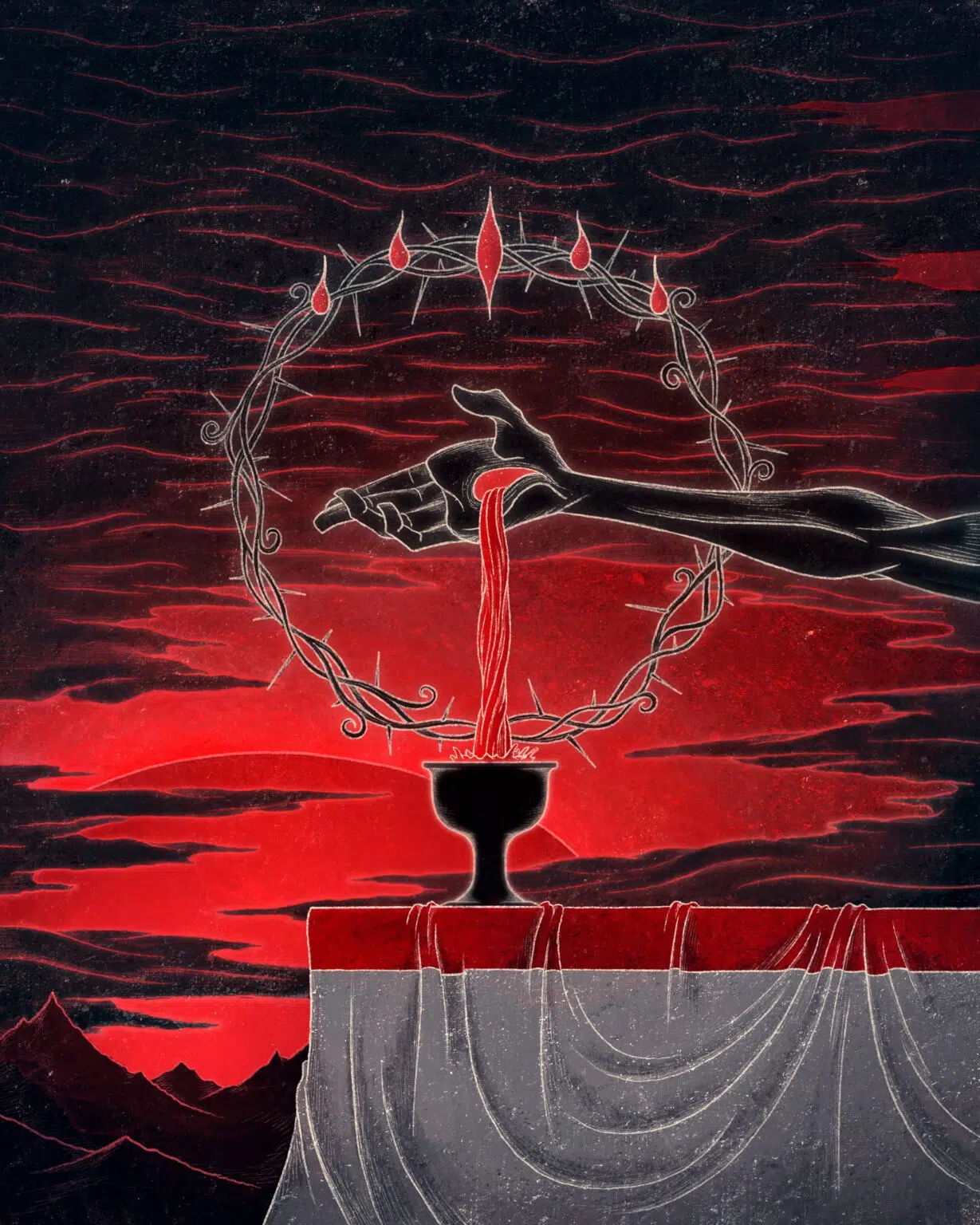
Have you ever tried to read through Leviticus, and gotten bogged down in the details? If so, this article is for you. On the other hand, if you love reading Leviticus, finding joy in all the precise rules or beautifully-deep symbolism, I believe you will discover this article is for you, too. Leviticus is one of the main books that terrorizes Bible reading plans because it is so unrelatable. Full of slaughter and blood, on the surface Leviticus holds little connection to our modern world; it does not seem practical. Certainly, all these sacrificial laws point to how sinful humanity is, and should make us thankful that Jesus came as a perfect sacrifice; we are grateful that we no longer need to slay sheep. But, is this all we can glean?
Notably, Jesus placed a much higher value on the laws found in the Old Testament. Rather than setting the Old Testament laws aside to make way for something better, Christ claimed that not one dot of the old Law could pass away; he had come to fulfill the Law, not to abolish it (Luke 24:27; Matt 5:18).[1]Note that the reference to “Moses” in Luke 24:27 is a way to reference the entire Pentateuch (the first 5 books of the Bible, Genesis, Exodus, Leviticus, Numbers, and Deuteronomy). His references to the ‘Law’ included not only the rules found in Leviticus, but also those throughout the whole PentateuchPentateuch: The first five books of the Old Testament, all of which were written by Moses: Genesis, Exodus, Leviticus, Numbers, Deuteronomy. Also called the ‘Torah’.. Since not even one dot of the Law can pass away, this means that Jesus’ fulfillment of the Law isn’t a replacement. What then did Jesus mean when he said that he would ‘fulfill’ the whole Law?
Since a full study of Christ’s fulfillment of the entire Pentateuch would result in rather large tomeTome: A very large, heavy, or scholarly book., this article will focus its attention on Christ’s fulfillment of one part of the Law: the five common offerings listed in Leviticus chapters 1-7. Ultimately, we’ll find that Christ’s death isn’t only a better sacrifice than those required by LeviticalLevitical (adjective): of the book of Leviticus; that which is found in the book of Leviticus. law (though it is better). We’ll see that his crucifixion is not a simple replacement of those older sacrifices (though it is the only sacrifice we now need). Rather, it is Christ’s obedience to the sacrificial laws that allowed him to completely and permanently fulfill each of them.
Now, before we jump into Leviticus, we need to back up a bit to properly situate our text within its scriptural and historical context. Then we will examine each of the five common offerings in turn, in the order they are introduced in Leviticus. With each offering, we’ll first explore the purpose of the sacrifice in the context of ancient Israel, and then examine how the sacrifice is fulfilled through Christ’s obedience. Through this study, I hope it becomes clear that Christ did not fulfill these sacrifices by just providing a better sacrifice, nor simply by becoming the archetypeArchetype: The model from which copies are made. that the ‘shadowy’ ceremonial laws were pointing to. Christ also fulfilled the sacrificial system through his obedience to the commands given for each.[2]Ira Jolivet, “Christ the ΤΕΛΟΣ in Romans 10:4 as Both Fulfillment and Termination of the Law,” RQ 51, no. 1 (2009): 15.
The Loss of Eden
To situate Leviticus, we need to start in the Garden of Eden. It was there that the first humans were placed after being made in God’s image (Gen 2:8). Created perfect and holy, Adam and Eve were set apart to enjoy and reflect God, and thus everywhere they went was also holy.[3]Herman Bavinck, Reformed Dogmatics Volume 2: God and Creation, ed. John Bolt, trans. John Vriend (Grand Rapids, MI: Baker Academic, 2004), 561. In Eden, they dwelled in God’s presence with no need for a mediator or a temple; God walked and talked with them, and his relationship to them was personal and intimate.[4]Tremper Longman III, Immanuel in Our Place: Seeing Christ in Israel’s Worship, GOAT, (Philipsburg, NJ: P&R Publishing, 2001), 6., [5]Bavinck, RD Volume 2, 559.
However, when Adam and Eve rebelled against God, their relationship with him changed drastically. They were removed from God’s presence and from the garden, and prevented from returning (Gen 3:22-23).[6]Scripture citations assume continuance from the prior scripture citation. As each section addressing the various offerings begins with Leviticus in the header, the majority of the references will be from Leviticus. All of their descendants now bear the same curse; they are sinful and unable to have fellowship with God, and are objects of God’s wrath (Rom 1:18; Eph 2:1-3). Thus, ever since Eden, the biggest question in Scripture is this: How can humans once again have intimate and personal communion with God and enjoy his presence?
Leaping forward to Leviticus, where the laws for sacrifices are given, the situation has improved significantly: God is dwelling in a newly-built tabernacleTabernacle: The portable ‘temple’ of Israel, this building was a large, beautifully decorated tent where God’s presence dwelt with his people, Israel. Inside the tent were items for making offerings to God. God himself gave instructions for how to build this tent and all of the items within it in Exodus 25-27. within the midst of his chosen people, Israel.[7]Vern S. Poythress, The Shadow of Christ in the Law of Moses, (Phillipsburg, NJ: P&R, 1991), 13. However, Leviticus begins with a problem: After the tabernacle was constructed in the last chapter of Exodus, no one was able to enter it to commune with God; not even Moses:
Then the cloud covered the tent of meeting, and the glory of the Lord filled the tabernacle. And Moses was not able to enter the tent of meeting because the cloud settled on it, and the glory of the Lord filled the tabernacle. –Exodus 40:34-35[8]Note that throughout Leviticus, the titles ‘tabernacle’ and ‘tent of meeting’ are interchangeable; both refer to the newly constructed tabernacle, where God began dwelling among His people in Exodus 40:34.
God is holy, but the Israelites were not, and could not enter his presence.[9]Poythress, The Shadow of Christ, 142. For this reason, at the beginning of Leviticus God calls out to Moses from the tabernacle with instructions on how to administer the sacrifices and keep his ceremonial and civil laws; Moses cannot yet go inside:[10]Andrew Bonar, A Commentary on Leviticus, The Geneva Series of Commentaries (Carlisle, PA: Banner of Truth Trust, 1978), 11.
The Lord called Moses and spoke to him from the tent of meeting –Leviticus 1:1
However, as the sacrifices of Leviticus are performed and the laws within Leviticus kept, the people are enabled to gain more intimate access to God. We see this when God speaks again at the beginning of Numbers; there, he is speaking to Moses from inside the tent:
The Lord spoke to Moses in the wilderness of Sinai, in the tent of meeting –Num 1:1
While being inside the tabernacle is not identical to the intimate relationship that humanity had with God in Eden, the sacrifices were able to improve the situation. How did they achieve this? And how does Christ fulfill them in the New Testament? We’ll now turn our attention to survey of each of the common sacrifices to address these questions.
The Burnt [lit. Going-Up] Offering – Leviticus 1:1-17; 6:8-13
Leviticus begins its explanation of the common offerings with what is typically called the ‘Burnt’. It is likely named this because–unique to this sacrifice–the entire animal was completely burned on the altar (Lev 1:9,13). In the Hebrew language, this offering is literally called ‘that which goes up.’[11]The word is עֹלָה, from the root עָלָה, which means ‘to go up.’ Victor P. Hamilton, Handbook on the Pentateuch, (Grand Rapids, MI: Baker Book House, 1982), 257. To make this sacrifice, an Israelite needed to bring a male bull, goat, or sheep without blemish to the tabernacle; if the offerer was very poor, a turtledove or pigeon would suffice (Lev 1:3, 10, 14). The offerer would lean his hand on his offering and kill it at the entrance to the tabernacle, and then the priest would arrange and burn the entire animal on the altar, throwing the blood on the altar’s sides.[12]With the exception of the crop of the bird, which was discarded with the ashes (Lev 1:16). This sacrifice was so vital to accessing God’s presence, that the priests were commanded to keep a Burnt offering burning continually on behalf of themselves and all the people; the fire on the altar must never go out, for God was dwelling in the midst of an unholy people (Lev 6:12-13). This resulted in two Burnt offerings offered every day, morning and evening, on behalf of all the people (Num 28:1-8).
Leviticus states that the purpose of this offering was to make the offerer acceptable before God, and to make atonement for him (Lev 1:3,4). As the offerer leaned his hand on the victim’s head, he identified himself with the animal.[13]Morales, Who Shall Ascend, 129. Thus, when the animal was slain, it was slain in the place of the person offering it, ransoming the life of the offerer.[14]Wenham, Leviticus, 61-62. Note that some interpret the leaning of the hand on the animal as the transmission of the offerer’s sins to the animal. While this is certainly the case with the scapegoat in Leviticus 16, the scapegoat was removed from the camp and not burned after sins were transmitted to it; it was not offered on the altar, but was rather treated as unclean. Thus, it seems more likely that the offerer was identifying himself with the animal, in essence offering himself on the altar, dying to himself before God. Wenham notes that either interpretation of the action can be used, for either way, the animal becomes a ransom for the offerer, and is necessary because of the offerer’s sinful nature. A bloody ransom was required because, ever since Eden, the only way for sinful humanity to access the presence of God is through death; thus the blemish-free animal became a substitute for the offerer.[15]Morales, Who Shall Ascend, 129. When the Burnt sacrifice was offered, the rising smoke became a “pleasing aroma to the Lord” (Lev 1:9, 13, 17).[16]Hamilton, Pentateuch, 257. It was only after the smoke of the offering went up that the offerer could gain entrance to the tabernacle and draw near to the presence of God. Thus the blood of this offering acted like a cloak, temporarily covering the sinful nature of the offerer and setting him apart as holy before the presence of God.[17]Bonar, Leviticus, 32.
How Jesus obeyed the stipulations of this particular offering is rather straightforward. He is a “male without blemish,” completely perfect in his life and conduct, in both body and soul, who became a ransom for many:[18]Bonar, Leviticus, 13.
You were ransomed… with the precious blood of Christ, like that of a lamb without blemish or spot. –1 Peter 1:18-19
His entire body was offered up to God on the cross–literally lifted up–bearing the wrath of God in our place, as a “fragrant offering:”[19]Bavinck, RD Volume 3, 339.
Christ redeemed us from the curse of the law by becoming a curse for us—for it is written, “Cursed is everyone who is hanged on a tree”—so that in Christ Jesus the blessing of Abraham might come to the Gentiles, so that we might receive the promised Spirit through faith. – Galatians 3:13-14
Christ loved us and gave himself up for us, a fragrant offering and sacrifice to God. –Ephesians 5:2
He was slain in the place of those who offered him–both Jews and Gentiles–and his blood atoned to make holy those who trust in him as their only offering before God, allowing us to draw near to God:
For by a single offering he has perfected for all time those who are being sanctifiedSanctified: Set apart for a holy or sacred purpose.… [Therefore] let us draw near with a true heart in full assurance of faith, with our hearts sprinkled clean from an evil conscience and our bodies washed with pure water. –Hebrews 10:14, 22
Thus Christ obeyed the law and fulfilled the requirements to be our Burnt offering.
The Grain [lit. Gift] Offering – Leviticus 2:1-16; 6:14-23
The next offering listed in Leviticus is the ‘Grain’ offering, named so in English because of what is offered; translated literally it would be called the ‘Gift’ offering.[20]The Hebrew is מִנְחָה֙, meaning gift or simply sacrifice. There is more disagreement among scholars about the symbolism of this offering, but we do know how it was performed. To start, the Grain offering could only be offered after a Burnt offering, because the offerer first needed to be made holy and gain “full acceptance for his soul.”[21]Bonar, Leviticus, 32. Like the Burnt offering, the priests were required to offer the Grain offering at least twice a day, morning and evening, on behalf of the people (Num 28:1-8). The sacrifice consisted of either fine flour with salt, or loaves of unleavened, salted bread (Lev 2:1, 4-5, 7). Only a small portion of this offering was actually burned, and the fine flour was always offered with frankincenseFrankincense: A sweet-smelling substance used for incense and perfume in the ancient world; it is still in use today! (Lev 2:9-10, 13). The unburned portion of the Grain offering became a source of food for the priests; it was given to the priest performing the sacrifice, and only priests were allowed to eat it (Lev 2:10).[22]John H. Sailhamer, The Pentateuch as Narrative: A Biblical-Theological Commentary, Library of Biblical Interpretation (Grand Rapids, MI: Zondervan Publishing House, 1992), 325. Further, it was required that the grain offering be eaten within the courtyard of the tabernacle (Lev 6:16). Thus, it provided the priests with sustenance for their daily mediatorialMediatorial (adjective): Of going between two people to create peace (in this case, going between Israel and God to create peace). work. In addition to being offered twice a day, it was also offered the day a new high priestHigh Priest: This was the only priest who was allowed into the most holy part of the tabernacle or temple in Israel, which was called the Holy of Holies. It was in the Holy of Holies that God’s presence dwelt. The High Priest could only enter the Holy of Holies once a year. was ordained (Lev 6:20). However, the Grain offering for a new high priest needed to be burned completely; no part was saved to be eaten. A Grain offering could also be brought as a firstfruits offering at the beginning of harvest, a joyous gift of thanksgiving to God (Lev 2:14).
While scholars have disagreed over the symbolism of the Grain offering, some conclusions can still be drawn. Since this was a daily offering made on behalf of the entire population, and because it was only made after the people had been deemed holy through the blood of the Burnt offering, the bread likely represented either the lives or the work of the people being gifted or dedicated to God.[23]Wenham, Leviticus, 72.,[24]Bonar, Leviticus, 34. Bonar points out the lack of blood in this offering, and concludes that it is the lives or work of the offerer that are being dedicated. This assumption is reinforced by the lack of blood in this offering; it is either the living bodies of the people or their active work that are being consecratedConsecrated: To set something aside for divine use; to mark something as holy.. This consecrationConsecration: Setting something aside for divine use; to mark something as holy. needed to be daily represented by loaves of bread, because the people were not able to keep God’s covenant in reality (Ps 78:10-11). While Leviticus does not tell us why the Grain offering for the high priest was treated differently from the common Grain offering, burning the entire offering of the high priest may have symbolized the body or life of the new high priest being completely gifted to God.[25]Sailhamer, The Pentateuch, 328.
We see Christ obeying the stipulations for this offering in several ways. First, his entire life of obedience became an offering to God on behalf of his people; he wholly consecrated his entire human life and work to God, and he was able to fully obey all of the commandments of the old covenant.[26]Bavinck, RD Volume 3, 409. Thus, just as the loaves of bread temporarily represented the dedication of the offerer’s life and work, so Christ in his humanity became the Bread of Life:
Jesus said to them, “I am the bread of life; whoever comes to me shall not hunger, and whoever believes in me shall never thirst. –John 6:35
Although he was a son, he learned obedience through what he suffered. And being made perfect, he became the source of eternal salvation to all who obey him –Hebrews 5:8-9
Christ’s life was also offered with frankincense, for frankincense was given to the newborn Christ by the wise men; this symbolism reinforces the dedication of Christ wholly unto God (Matt 2:11). Second, by consecrating his entire life to God, Christ became qualified to be anointed as Great High Priest, able to perfectly represent those who trust in him:
And being made perfect, he became the source of eternal salvation to all who obey him, being designated by God a high priest. –Hebrews 5:9-10
For the law appoints men in their weakness as high priests, but the word of the oath, which came later than the law, appoints a Son who has been made perfect forever. –Hebrews 7:28
Third, just as the Grain offering fed the priests, so Christ has also given his body to his disciples as food through Communion, declaring them priests of God:
Jesus took bread, and after blessing it broke it and gave it to the disciples, and said, “Take, eat; this is my body.” –Matt 26:26
You yourselves like living stones are being built up as a spiritual house, to be a holy priesthood, to offer spiritual sacrifices acceptable to God through Jesus Christ. –1 Pet 2:5
Thus Christ obeyed the law and fulfilled the requirements to be our Grain offering.
The Peace Offering – Leviticus 3:1-17; 7:11-36
The third common offering listed in Leviticus is the ‘Peace’ Offering.[27]This is the literal Hebrew translation, from the word שְׁלָמִ֖ים. It’s root is the same as the root of the word for peace, שָׁלוֹם. It consisted of sacrificing a perfect male or female from the herd or flock, and could only be performed after the offerer had been made holy through a Burnt offering (Lev 3:1, 7, 12).[28]Keith A. Mathison, Given For You: Reclaiming Calvin’s Doctrine of the Lord’s Supper (Phillipsburg, NJ: P&R Publishing, 2002), 198. Like for the Burnt offering, the offerer leaned his hand on the animal’s head before slaying it. Unlike the Burnt offering, for the Peace offering only the fat and certain entrailsEntrails: Internal organs of an animal. were actually burned on the altar, and these were burned on top of the Burnt offering (Lev 3:3-5). The blood of the animal was also thrown against the sides of the altar (Lev 3:2). Then the breast and right thigh were given as a gift to the priest performing the sacrifice, often along with a loaf of bread (Lev 7:14, 31-32). Finally, the rest of the animal was cooked and eaten by the offerer and his friends and family, probably in or near the sanctuary (Lev 7:15-16, 19-20).[29]Wenham, Leviticus, 75.
While the Burnt and Grain offerings were offered daily, the Peace offering was optional, and could be brought at any time, by anyone who wished to make one.[30]Wenham, Leviticus, 74. Three common reasons for making this offering are listed in Leviticus: as an offering of thanksgiving, as an offering to fulfill a vow, or as a freewill offering (Lev 7:12, 16). Thus, it seems that this offering allowed a person to commune with God in a special way, for this is the only offering that was optional, and was also the only offering that allowed the offerer to participate in eating the meat of the animal.[31]Mathison, Given For You, 195. The best parts of the animal–the fat–were burned on the altar, but then the priests and the offerer, plus any friends and family who were ceremonially clean, partook of the rest (Lev 7:20).[32]Wenham, Leviticus, 80. Thus, the Peace offering was meant to be a joyous occasion, as it represented a meal shared with God and the community (Deut 12:7).[33]Wenham, Leviticus, 79. It was a unique way to express thankfulness and enjoy fellowship and peace with God. However, this level of fellowship with God was only possible after the Burnt offering and Peace offering were made; even after the redemptionRedemption (noun): The act of redeeming, or buying back, something that has been sold or lost. of the Burnt offering, sinful humanity could only approach God through blood.[34]Mathison, Given For You, 197.
Looking forward to Christ, we see the stipulations of the Peace offering fulfilled through Christ’s shed blood, freely offered for us to obtain peace with God, for it is through his blood that we are reconciled to God:
For in [Christ] all the fullness of God was pleased to dwell, and through him to reconcile to himself all things, whether on earth or in heaven, making peace by the blood of his cross. –Col 1:19-20
Further, just as the Israelites celebrated their peace with God through a communal meal, so now through the institution of the Lord’s Supper, Christians joyously celebrate their peace with God and each other:
The cup of blessing that we bless, is it not a participation in the blood of Christ? bThe bread that we break, is it not a participation in the body of Christ? –1 Cor 10:16
Therefore, since we have been justified by faith, we have peace with God through our Lord Jesus Christ. –Rom 5:1
“The Lord’s Supper is the sacrificial meal of this final and perfect peace offering,” for “as often as you eat this meal and drink this cup, you proclaim [Christ’s] death.”[35]Mathison, Given For You, 202. In this way, Christ obeyed the law and fulfilled the requirements to be our Peace offering.
The Sin Offering – Leviticus 4:1-5:13; 6:24-30
The fourth common offering is the ‘Sin’ or ‘Purification’ Offering.[36]The word used is חַטָּֽאת, from the root חָטָא, which means to sin, go wrong, or miss. Note that in Hebrew, this isn’t called a sin offering, just the Sin. However, as we shall see, this offering is used mainly for purification, not for moral sins. For this offering, the required animal varied based on who was bringing the sacrifice. A bull was required for the sins of the entire congregation or for the sins of the high priest; this was the most expensive sacrifice possible (Lev 4:3, 13-14).[37]Bonar, Leviticus, 66-67. For the rest of the people, goats or lambs would suffice, and the poor could substitute two turtledoves or two pigeons if they could not afford a lamb; the extremely poor could substitute a tenth of an ephahEphah (noun): An ancient measurement for dry things like flour, it was equal to about 20 quarts or 80 cups. 1/10 of an ephah was about 8 cups of flour. of fine flour (Lev 4:22-23, 27, 32; 5:7, 11). If a priest or the entire congregation was the offender, then the blood of the animal was sprinkled seven times against the veil of the sanctuary and put on the horns of the altar inside the tabernacle, because the “tabernacle itself had been defiled.”[38]Poythress, The Shadow of Christ, 45. The rest was poured out at the base of the altar of burnt offerings in the tabernacle’s sanctuary (Lev 4:6-7,17-18). For a leader or common person, the blood was only put on the horns of the altar for burnt offering, and the rest was poured out at its base (Lev 4:25, 30). For any type of animal, hands were laid on it before it was slain, and the fat and certain entrails were removed–just as for the Peace offering–and burned on the altar of burnt offering. For a common Sin offering, the rest of the animal was given to the priest as food to consume within the tabernacle; however for a Sin offering for the congregation or the high priest, the rest of the animal was carried outside the camp and burned there until completely consumed (4:8-12, 19-21, 31, 35; 6:25-26).[39]Sailhamer, The Pentateuch, 326. For the poor, only one bird was used for the sin offering; the second bird was used as a burnt offering (Lev 5:9-10).
The purpose of the Sin offering was to make purification for an unintentional breach of God’s commandments.[40]Wenham, Leviticus, 94. This sacrifice imputed the offerer’s sins to the animal, so that the offerer could be forgiven by God (Lev 4:6, 10, 26, 31, 35). The types of sins atoned for by this sacrifice seem to be largely errors of uncleanliness, including touching an unclean thing, accidentally uttering a rash oath, or touching human uncleanness (Lev 5:2-4). Thus, this offering would be necessary after any type of ceremonial uncleanness, including events like childbirth, monthly menstruation, or healing from diarrhea or leperous disease; this is why it is sometimes called the Purification offering (Lev 12:6; 15:28-30; 15:15; 14:31).[41]Wenham, Leviticus, 88-89. Because of the accommodations for the poor and very poor, this was probably a sacrifice that God wanted his people to perform frequently. However, the Sin offering only atoned for unintentional sins; for these it cleansed the pollution of sin and opened the door to communion with God.[42]Bavinck, RD Volume 3, 333. Unfortunately, there was no offering available for sins committed intentionally, “with a high hand” (Num 15:30-36).
Looking forward to Christ, we see the Sin offering fulfilled when God’s Son–who knew no sin–became sin for us, just as the animals became sin for the people:[43]Bavinck, RD Volume 3, 339.
For our sake he made him to be sin who knew no sin, so that in him we might become the righteousness of God. –2 Corinthians 5:21
For God has done what the law, weakened by the flesh, could not do. By sending his own Son in the likeness of sinful flesh and for sin, he condemned sin in the flesh, in order that the righteous requirement of the law might be fulfilled in us, who walk not according to the flesh but according to the Spirit. –Romans 8:3-4
Just as the animal was slain to purify the offerer, Christ was slain for the sins of his people, slain to take away the stain of sins:
“Behold, the Lamb of God, who takes away the sin of the world!” –John 1:29
They have washed their robes and made them white in the blood of the Lamb. –Revelation 7:14[44]Wenham, Leviticus, 101.
For if the blood of goats and bulls, and the sprinkling of defiled persons with the ashes of a heifer, sanctify for the purification of the flesh, how much more will the blood of Christ, who through the eternal Spirit offered himself without blemish to God, purify our conscience from dead works to serve the living God. –Hebrews 9:13-14
Just as the animal bore the sin of the offerer, so Christ bore our sins that we might die to sin:
He himself bore our sins in his body on the tree, that we might die to sin and live to righteousness. –1 Peter 2:24
Since Christ died for the sins of all his people, he was crucified outside of the city just like the bull of the people was burned outside of the camp:[45]Bonar, Leviticus, 74.
For the bodies of those animals whose blood is brought into the holy places by the high priest as a sacrifice for sin are burned outside the camp. So Jesus also suffered outside the gate in order to sanctify the people through his own blood. –Hebrews 13:11-12
Jesus now intercedes with his blood in the Holy of HoliesHoly of Holies: The innermost room of the tabernacle and temple, there is where the presence of God dwelt. Only the High Priest could enter this room, and he could only enter it once a year., the throne room of God, just as the blood of the bull interceded within the tabernacle:[46]Jamieson, Paradox of Sonship, 92-93.
But when Christ appeared as a high priest of the good things that have come, then through the greater and more perfect tent (not made with hands, that is, not of this creation) he entered once for all into the holy places, not by means of the blood of goats and calves but by means of his own blood, thus securing an eternal redemption. For if the blood of goats and bulls, and the sprinkling of defiled persons with the ashes of a heifer, sanctify for the purification of the flesh, how much more will the blood of Christ, who through the eternal Spirit offered himself without blemish to God, purify our conscience from dead works to serve the living God. –Hebrews 9:12-14
Thus Christ obeyed the law and fulfilled the requirements to be our Sin offering.
The Guilt Offering – Leviticus 5:14-6:7; 7:1-10
Last but not least is the ‘Guilt’ offering.[47]The Hebrew for Guilt offering is אָשָׁם, meaning guilt or trespass. The steps required to perform this offering were more straightforward than for the Sin offering. Regardless of who brought the sacrifice, a ram was always required (Lev 5:15). This was an expensive animal, and it needed to be perfect–without blemish. Further, the offerer also needed to bring one-fifth of the cost of the ram in silver in addition to the ram to the tabernacle (Lev 5:16). To perform the offering, the fat and certain entrails were burned in the same way as for the Peace and Sin offering. Then the priest received the rest of the animal for food to eat while he worked within the tabernacle, just as for a common Sin offering; the priest also received the animal’s hide (Lev 7:6-8). There was no accommodation for the poor; a ram was required of everyone. The silver was given to the sanctuary if the offense was committed against God, or else to the neighbor who was wronged by the offerer’s sin (Lev 5:16; 6:5).
The purpose of the Guilt offering was to atone for sins that were either done unintentionally against the holy things, or else those done intentionally against a neighbor. These sins included stealing, finding a lost item and not returning it, oppression, deception, and swearing falsely (Lev 6:1-3). For sins committed against a neighbor that resulted in financial loss for the neighbor, in addition to bringing a sacrificial ram, God also required the offender to restore in full what was taken from the neighbor, plus an additional fifth of the cost in silver (Lev 6:4-5). Thus, to maintain communion with God, God demanded more than just repentance and sacrifice; he also demanded restitutionRestitution: The giving back the cost of what was damaged or stolen, including enough to cover any additional financial loss or emotional distress that the sinful act caused..[48]Bavinck, RD Volume 3, 333.
Interestingly, it seems like this was an offering that could easily not be made, since the Guilt offering often covered deeds that were “lawful in appearance, while selfish in reality.” Since some of these sins–like lying or stealing–were often secret, it was up to the guilty party to choose to confess their sin to their neighbor, give them restitution, and bring a ram to the tabernacle.[49]Bonar, Leviticus, 107. For this reason, Proverbs says that fools despise the guilt offering, but “the upright enjoy acceptance” (Lev 14:9). The Guilt offering provided a way for sinners to clear their guilty consciousness through admitting their sin, making restitution, and sacrificing a ram to atone for their guilt before God. Those who made this offering were told that they were forgiven (Lev 6:7).
Looking forward to Christ, we recall that all of humanity has incurred guilt by failing to keep the law of God:
For whoever keeps the whole law but fails in one point has become guilty of all of it. For he who said, “Do not commit adultery,” also said, “Do not murder.” If you do not commit adultery but do murder, you have become a transgressor of the law. –James 2:10–11
Because humans were made in God’s image and for his glory, they owe God their lives. Having failed to live holy lives dedicated to God, humans are debtors. This means we not only owe God our lives, we also owe him restitution. How could we ever repay him? This is a debt too great for us to pay:
For the wages of sin is death, but the free gift of God is eternal life in Christ Jesus our Lord. –Romans 6:23
And you were dead in the trespassesTrespasses (plural noun): Broken laws; disobedience. and sins in which you once walked, following the course of this world, following the prince of the power of the air, the spirit that is now at work in the sons of disobedience—among whom we all once lived in the passions of our flesh, carrying out the desires of the flesh and the mind, and were by nature children of wrath, like the rest of mankind. –Ephesians 2:1–3
Blessedly, the Guilt offering was fulfilled in Christ–the guiltless one–when he bore our guilt on the cross. Note how the New Testament stresses Jesus’ guiltless innocence, which was apparent in the courts of both the Jews and the Gentiles:
Now the chief priests and the whole council were seeking false testimony against Jesus that they might put him to death, but they found none, though many false witnesses came forward. –Matthew 26:59–60
Then when Judas, his betrayer, saw that Jesus was condemned, he changed his mind and brought back the thirty pieces of silver to the chief priests and the elders, saying, “I have sinned by betraying innocent blood.” –Matthew 27:3–4
Then Pilate said to the chief priests and the crowds, “I find no guilt in this man.” –Luke 23:4
And though they found in him no guilt worthy of death, they asked Pilate to have him executed. –Acts 13:28
Just like the ram, Christ was without blemish, guiltless, and of great worth. Just as restitution was required, Jesus brought his perfect and precious life to replace our corrupted ones. It is noteworthy that even silver was brought to the temple on the day of Christ’s crucifixion; the money Judas threw into the temple was likely much more than one-fifth the cost of a man. We are told that his death provided full atonement, and “canceled the record of debt that stood against us with its legal demands” (Col 2:14). Through his death Jesus purifies our consciousness, just as the Guilt offering allowed the offender to “enjoy acceptance” before God:
For if the blood of goats and bulls, and the sprinkling of defiled persons with the ashes of a heifer, sanctify for the purification of the flesh, how much more will the blood of Christ, who through the eternal Spirit offered himself without blemish to God, purify our conscience from dead works to serve the living God. –Hebrews 9:13–14
Thus Christ obeyed the law and fulfilled the requirements to be our Guilt offering.
Conclusion
We’ve concluded that Christ obeyed the requirements of each of the five common offerings found in Leviticus. But can one offering–even a perfect one–be legally substituted for five? Thankfully, the answer is yes; yes, the self-sacrifice of the infinite God-man on the cross can legitimately accomplish what the slaughter of four separate animals and handfuls of flour never could: perfect communion with God for all who place their faith in him:[50]Francis Turretin, Institutes of Elenctic Theology: Vol. 2: Eleventh Through Seventeenth Topics, ed. James T. Dennison, Jr., trans. George Musgrave Giger (Phillipsburg, NJ: P&R Publishing, 1994), E-Book, Twenty-Fifth Question, Response XII, 142.
But when Christ appeared as a high priest of the good things that have come, then through the greater and more perfect tent (not made with hands, that is, not of this creation) he entered once for all into the holy places, not by means of the blood of goats and calves but by means of his own blood, thus securing an eternal redemption. For if the blood of goats and bulls, and the sprinkling of defiled persons with the ashes of a heifer, sanctify for the purification of the flesh, how much more will the blood of Christ, who through the eternal Spirit offered himself without blemish to God, purify our conscience from dead works to serve the living God. –Hebrews 9:11–14
For Christ has entered, not into holy places made with hands, which are copies of the true things, but into heaven itself, now to appear in the presence of God on our behalf. Nor was it to offer himself repeatedly, as the high priest enters the holy places every year with blood not his own, for then he would have had to suffer repeatedly since the foundation of the world. But as it is, he has appeared once for all at the end of the ages to put away sin by the sacrifice of himself. –Hebrews 9:24–27
Because Christ is human, he stands in perfect solidarity with humanity and is able–unlike the temporary aid of bulls, goats, and sheep–to cover human unholiness completely and permanently:[51]R. B. Jamieson, The Paradox of Sonship: Christology in the Epistle to the Hebrews, Studies in Christian Doctrine and Scripture (Downers Grove, IL: IVP Academic, 2021), 80, 95.
And every priest stands daily at his service, offering repeatedly the same sacrifices, which can never take away sins. But when Christ had offered for all time a single sacrifice for sins, he sat down at the right hand of God, waiting from that time until his enemies should be made a footstool for his feet. For by a single offering he has perfected for all time those who are being sanctified. –Hebrews 10:11–14
Thus he became the perfect ‘Lamb of God’:
The next day he saw Jesus coming toward him, and said, “Behold, the Lamb of God, who takes away the sin of the world! –John 1:29
…knowing that you were ransomed from the futile ways inherited from your forefathers, not with perishable things such as silver or gold, but with the precious blood of Christ, like that of a lamb without blemish or spot. –1 Peter 1:18–19
Because he is also the infinite Son of God, he is able to cover the unholiness of many people; as many as are called to trust in him:[52]Bonar, Leviticus, 85.
The former priests were many in number, because they were prevented by death from continuing in office, but he holds his priesthood permanently, because he continues forever. –Hebrews 7:23–24
And just as it is appointed for man to die once, and after that comes judgment, so Christ, having been offered once to bear the sins of many, will appear a second time, not to deal with sin but to save those who are eagerly waiting for him. –Hebrews 9:27–28
Most importantly, his perfect blood can atone for all types of sins, not only unintentional ones:[53]Bavinck, RD Volume 3, 338-9.
But if we walk in the light, as he is in the light, we have fellowship with one another, and the blood of Jesus his Son cleanses us from all sin. –1 John 1:7
For by a single offering he has perfected for all time those who are being sanctified. –Hebrews 10:14
Thus, through one perfect and permanent sacrifice Christ secured for his people “confident access to God.”[54]Bavinck, RD Volume 3, 339-40., [55]Mathison, Given For You, 212. Yes, the blood of bulls and goats were shadows; shadows that pointed to another better and more perfect sacrifice that would fulfill the whole law (Heb 10:1-10).[56]Bavinck, RD Volume 3, 335. But through Christ’s blood, the shadow of the law was lifted and light came into the world (John 1:4, 9, 17-18). It was ultimately through Christ’s obedience to the Law that this was accomplished.[57]Poythress, The Shadow of Christ, 49.
While the scope of this study was limited, it is clear that Christ did not abolish the Levitical sacrifices; rather, he obeyed them and through his obedience he brought them to their consummationConsummation (noun): Completion, final form: Himself.[58]Bavinck, RD Volume 3, 338, 373. In the same way, the entire ceremonial, civil, and moral laws have been fulfilled through Christ’s obedience. Through his obedience, sacrifice, and mediation before the throne of God in heaven, Christ won the right for his followers to have direct and immediate access to God (Heb 9:24).[59]Poythress, The Shadow of Christ, 10-11. The tabernacle has been replaced, and now those who are in Christ have become “living stones” in the new tabernacle of God (1 Pet 2:5).[60]Turretin, Institutes vol. 2, Twenty-Fourth Question, Response XXVII, 137. The result for believers is better than Eden, because God now dwells within each believer through his Holy Spirit.
Thus, for believers today, the Old Testament law should be a source of hope and joy, for through Christ’s obedience the entire law has not been replaced, but completely and perfectly obeyed, and Christ’s followers are set free from its penalties. Now, the law functions to guide believers, for it reveals the heart and character of God.[61]Turretin, Institutes vol. 2, Twenty-Fifth Question, Response I, 139. Ultimately, knowledge of the old law should result in imitating Christ by denying sin, picking up one’s cross, and presenting one’s body as a living sacrifice to God, all through the power of the indwelling Holy Spirit (Rom 6:1-2; Matt 16:24; Rom 12:1-2; Gal 5:16).[62]Bavinck, RD Volume 3, 384.
Bibliography
Bahnsen, Greg L. “The Theonomic Reformed Approach to Law and Gospel.” Pages 93 to 143 in Five Views on Law and Gospel. Grand Rapids, MI: Zondervan Publishing House, 1996.
Bavinck, Herman. Reformed Dogmatics Volume 2: God and Creation. Edited by John Bolt. Translated by John Vriend. Grand Rapids, MI: Baker Academic, 2004.
—. Reformed Dogmatics Volume 3: Sin and Salvation in Christ. Edited by John Bolt. Translated by John Vriend. Grand Rapids, MI: Baker Academic, 2006.
Bonar, Andrew. A Commentary on Leviticus. The Geneva Series of Commentaries. Carlisle, PA: Banner of Truth Trust, 1978.
Hamilton, Victor P. Handbook on the Pentateuch. Grand Rapids, MI: Baker Book House, 1982.
Jamieson, R. B. The Paradox of Sonship: Christology in the Epistle to the Hebrews. Studies in Christian Doctrine and Scripture. Downers Grove, IL: IVP Academic, 2021.
Jolivet, Ira. “Christ the ΤΕΛΟΣ in Romans 10:4 as Both Fulfillment and Termination of the Law.” RQ 51, no. 1 (2009): 13-30.
Longman III, Tremper. Immanuel in Our Place: Seeing Christ in Israel’s Worship. GOAT. Philipsburg, NJ: P&R Publishing, 2001.
Mathison, Keith A. Given For You: Reclaiming Calvin’s Doctrine of the Lord’s Supper. Phillipsburg, NJ: P&R Publishing, 2002.
Moo, Douglas J. “The Law of Christ as the Fulfillment of the Law of Moses: A Modified Lutheran View.” Pages 319 to 376 in Five Views on Law and Gospel. Grand Rapids, MI: Zondervan Publishing House, 1996.
Morales, L. Michael. Who Shall Ascend the Mountain of the Lord? A biblical theology of the book of Leviticus. NSBT. Edited by D. A. Carson. Downers Grove, IL: InterVarsity, 2015.
Poythress, Vern S. The Shadow of Christ in the Law of Moses. Phillipsburg, NJ: P&R Publishing, 1991.
Sailhamer, John H. The Pentateuch as Narrative: A Biblical-Theological Commentary. Library of Biblical Interpretation. Grand Rapids, MI: Zondervan Publishing House, 1992.
Turretin, Francis. Institutes of Elenctic Theology: Vol. 2: Eleventh Through Seventeenth Topics. Edited by James T. Dennison, Jr. Translated by George Musgrave Giger. Phillipsburg, NJ: P&R Publishing, 1994. E-Book. https://research-ebsco-com.rts.idm.oclc.org/c/tl7dx3/search/details/e5ylnjlonz?db=nlebk&db=nlabk
VanGemeren, Willem A. “The Law is the Perfection of Righteousness in Jesus Christ: A Reformed Perspective.” Pages 13-58 in Five Views on Law and Gospel. Grand Rapids, MI: Zondervan Publishing House, 1996.
—. “Response to Greg L. Bahnsen.” Pages 144-149 in Five Views on Law and Gospel. Grand Rapids, MI: Zondervan Publishing House, 1996.
Wenham, G. J. The Book of Leviticus. NICOT. Grand Rapids, MI: Eerdmans, 1988.
Footnotes to prevent plagiarism
- 1: Note that the reference to “Moses” in Luke 24:27 is a way to reference the entire Pentateuch (the first 5 books of the Bible, Genesis, Exodus, Leviticus, Numbers, and Deuteronomy).
- 2: Ira Jolivet, “Christ the ΤΕΛΟΣ in Romans 10:4 as Both Fulfillment and Termination of the Law,” RQ 51, no. 1 (2009): 15.
- 3: Herman Bavinck, Reformed Dogmatics Volume 2: God and Creation, ed. John Bolt, trans. John Vriend (Grand Rapids, MI: Baker Academic, 2004), 561.
- 4: Tremper Longman III, Immanuel in Our Place: Seeing Christ in Israel’s Worship, GOAT, (Philipsburg, NJ: P&R Publishing, 2001), 6.
- 5: Bavinck, RD Volume 2, 559.
- 6: Scripture citations assume continuance from the prior scripture citation. As each section addressing the various offerings begins with Leviticus in the header, the majority of the references will be from Leviticus.
- 7: Vern S. Poythress, The Shadow of Christ in the Law of Moses, (Phillipsburg, NJ: P&R, 1991), 13.
- 8: Note that throughout Leviticus, the titles ‘tabernacle’ and ‘tent of meeting’ are interchangeable; both refer to the newly constructed tabernacle, where God began dwelling among His people in Exodus 40:34.
- 9: Poythress, The Shadow of Christ, 142.
- 10: Andrew Bonar, A Commentary on Leviticus, The Geneva Series of Commentaries (Carlisle, PA: Banner of Truth Trust, 1978), 11.
- 11: The word is עֹלָה, from the root עָלָה, which means ‘to go up.’ Victor P. Hamilton, Handbook on the Pentateuch, (Grand Rapids, MI: Baker Book House, 1982), 257.
- 12: With the exception of the crop of the bird, which was discarded with the ashes (Lev 1:16).
- 13: Morales, Who Shall Ascend, 129.
- 14: Wenham, Leviticus, 61-62. Note that some interpret the leaning of the hand on the animal as the transmission of the offerer’s sins to the animal. While this is certainly the case with the scapegoat in Leviticus 16, the scapegoat was removed from the camp and not burned after sins were transmitted to it; it was not offered on the altar, but was rather treated as unclean. Thus, it seems more likely that the offerer was identifying himself with the animal, in essence offering himself on the altar, dying to himself before God. Wenham notes that either interpretation of the action can be used, for either way, the animal becomes a ransom for the offerer, and is necessary because of the offerer’s sinful nature.
- 15: Morales, Who Shall Ascend, 129.
- 16: Hamilton, Pentateuch, 257.
- 17: Bonar, Leviticus, 32.
- 18: Bonar, Leviticus, 13.
- 19: Bavinck, RD Volume 3, 339.
- 20: The Hebrew is מִנְחָה֙, meaning gift or simply sacrifice.
- 21: Bonar, Leviticus, 32.
- 22: John H. Sailhamer, The Pentateuch as Narrative: A Biblical-Theological Commentary, Library of Biblical Interpretation (Grand Rapids, MI: Zondervan Publishing House, 1992), 325.
- 23: Wenham, Leviticus, 72.
- 24: Bonar, Leviticus, 34. Bonar points out the lack of blood in this offering, and concludes that it is the lives or work of the offerer that are being dedicated.
- 25: Sailhamer, The Pentateuch, 328.
- 26: Bavinck, RD Volume 3, 409.
- 27: This is the literal Hebrew translation, from the word שְׁלָמִ֖ים. It’s root is the same as the root of the word for peace, שָׁלוֹם.
- 28: Keith A. Mathison, Given For You: Reclaiming Calvin’s Doctrine of the Lord’s Supper (Phillipsburg, NJ: P&R Publishing, 2002), 198.
- 29: Wenham, Leviticus, 75.
- 30: Wenham, Leviticus, 74.
- 31: Mathison, Given For You, 195.
- 32: Wenham, Leviticus, 80.
- 33: Wenham, Leviticus, 79.
- 34: Mathison, Given For You, 197.
- 35: Mathison, Given For You, 202.
- 36: The word used is חַטָּֽאת, from the root חָטָא, which means to sin, go wrong, or miss. Note that in Hebrew, this isn’t called a sin offering, just the Sin. However, as we shall see, this offering is used mainly for purification, not for moral sins.
- 37: Bonar, Leviticus, 66-67.
- 38: Poythress, The Shadow of Christ, 45.
- 39: Sailhamer, The Pentateuch, 326.
- 40: Wenham, Leviticus, 94.
- 41: Wenham, Leviticus, 88-89.
- 42: Bavinck, RD Volume 3, 333.
- 43: Bavinck, RD Volume 3, 339.
- 44: Wenham, Leviticus, 101.
- 45: Bonar, Leviticus, 74.
- 46: Jamieson, Paradox of Sonship, 92-93.
- 47: The Hebrew for Guilt offering is אָשָׁם, meaning guilt or trespass.
- 48: Bavinck, RD Volume 3, 333.
- 49: Bonar, Leviticus, 107.
- 50: Francis Turretin, Institutes of Elenctic Theology: Vol. 2: Eleventh Through Seventeenth Topics, ed. James T. Dennison, Jr., trans. George Musgrave Giger (Phillipsburg, NJ: P&R Publishing, 1994), E-Book, Twenty-Fifth Question, Response XII, 142.
- 51: R. B. Jamieson, The Paradox of Sonship: Christology in the Epistle to the Hebrews, Studies in Christian Doctrine and Scripture (Downers Grove, IL: IVP Academic, 2021), 80, 95.
- 52: Bonar, Leviticus, 85.
- 53: Bavinck, RD Volume 3, 338-9.
- 54: Bavinck, RD Volume 3, 339-40.
- 55: Mathison, Given For You, 212.
- 56: Bavinck, RD Volume 3, 335.
- 57: Poythress, The Shadow of Christ, 49.
- 58: Bavinck, RD Volume 3, 338, 373.
- 59: Poythress, The Shadow of Christ, 10-11.
- 60: Turretin, Institutes vol. 2, Twenty-Fourth Question, Response XXVII, 137.
- 61: Turretin, Institutes vol. 2, Twenty-Fifth Question, Response I, 139.
- 62: Bavinck, RD Volume 3, 384.
Leave a Reply